Fat Loss: Step 1.0
Is losing fat one of your training goals?
Here’s the short of it: In mid-life (+ Menopause), fat loss is tricky, but doable.
The process
Is slow (10 pounds of desired weight loss takes 20+ weeks)
Requires a sustainable & consistent + progressive approach to nutrition and training
Requires stress & recovery to be managed
Principles of Fat Loss at any Age
Food quantity — in Calories — informs your body weight
Food quantity — in macronutrients — informs your body composition or body fat
(And food quality informs your health.)
So in practice, weight & fat loss require both a conservative or neutral calorie deficit and a macronutrient combination that:
Feels Sustainable for the long haul — in time commitment, lifestyle, cost, etc.
Enables you to function as a human at as close to 100% as you can get
Mitigates or eliminates muscle loss during the process
That’s why your first step toward your goal will be to build a diet that promotes satiety, minimizes cravings, and brings hella-health benefits in the mean time!
What Role does Exercise Play?
On its own, Cardio, HIT, or other Calorie-burning workouts are minimally - at best - beneficial as a tool for fat loss.
Cardiovascular exercise (includes moderate intensity exercise like taking a brisk walk or higher intensity training like HIT Workouts) is beneficial for preserving previous fat loss.
Resistance training builds muscle mass, which inherently changes lean mass to fat mass ratios. — Especially for beginners! Expect 1 to 4 pounds of muscle mass gainZ in Year One of lifting heavy, and up to 1-2 pounds more thereafter, assuming training & nutrition is consistently locked in.
📍Ready to Start?!
Here we go👇
Step 1.0: Assess your daily fruit & veggie intake.
Yup, fruits and veggies. You’re probably thinking, “That’s IT?!”
And I know — because you eat pretty healthy — you’re “good with getting in fruits & veggies.”
So prove to us both that you’re consistently eating enough fruits & veggies, so that you can progress to the next thing, Step 2.0 (protein).
Track your Fruits & Veggies for 4 - 7 Full Days
We’re looking for your average daily F&V intake.
Download the PDF log provided below, or download a food log app.
Review “what counts” on the list below as a fruit & veg and what doesn’t.
Measure and log as you go through your day.
Compare your tally to the data in the “How’d you do?” section.
What Foods Count?
For this assignment, all of these foods count:
Non-starchy vegetables, like broccoli, greens, onions, asparagus, cucumbers, tomatoes, bell peppers, mushrooms, etc.
Starchy vegetables, like potatoes, corn, peas, squash, carrots
Fruits, like berries, citrus, oranges, unsweetened applesauce, melons, apples. grapes, kiwi
Legumes, like black beans, edamame, lentils, chickpeas
Other oddball plants, like avocado, olives, tofu, fermented veggies like sauerkraut and Bubbies pickles
Preparation: Raw, cooked, canned (in water), and frozen varieties all count
What you Can't Count
Processed products: Items made from fruits and vegetables, like veggie straws, chickpea pasta, or cornmeal, are excluded.
Dried fruits and vegetables: do not count.
Fried foods: potatoes, etc.
Juices: Fruit and vegetable juices do not count. Even homemade.
Added ingredients: Products with added sugars, oils, or sauces do not count, such as sweetened applesauce, marinara sauce, or store-bought hummus.
Pre-packaged items: don’t disassembled and measure pre-packaged food ingredients. They don’t count for this assignment.
Measurement Methods
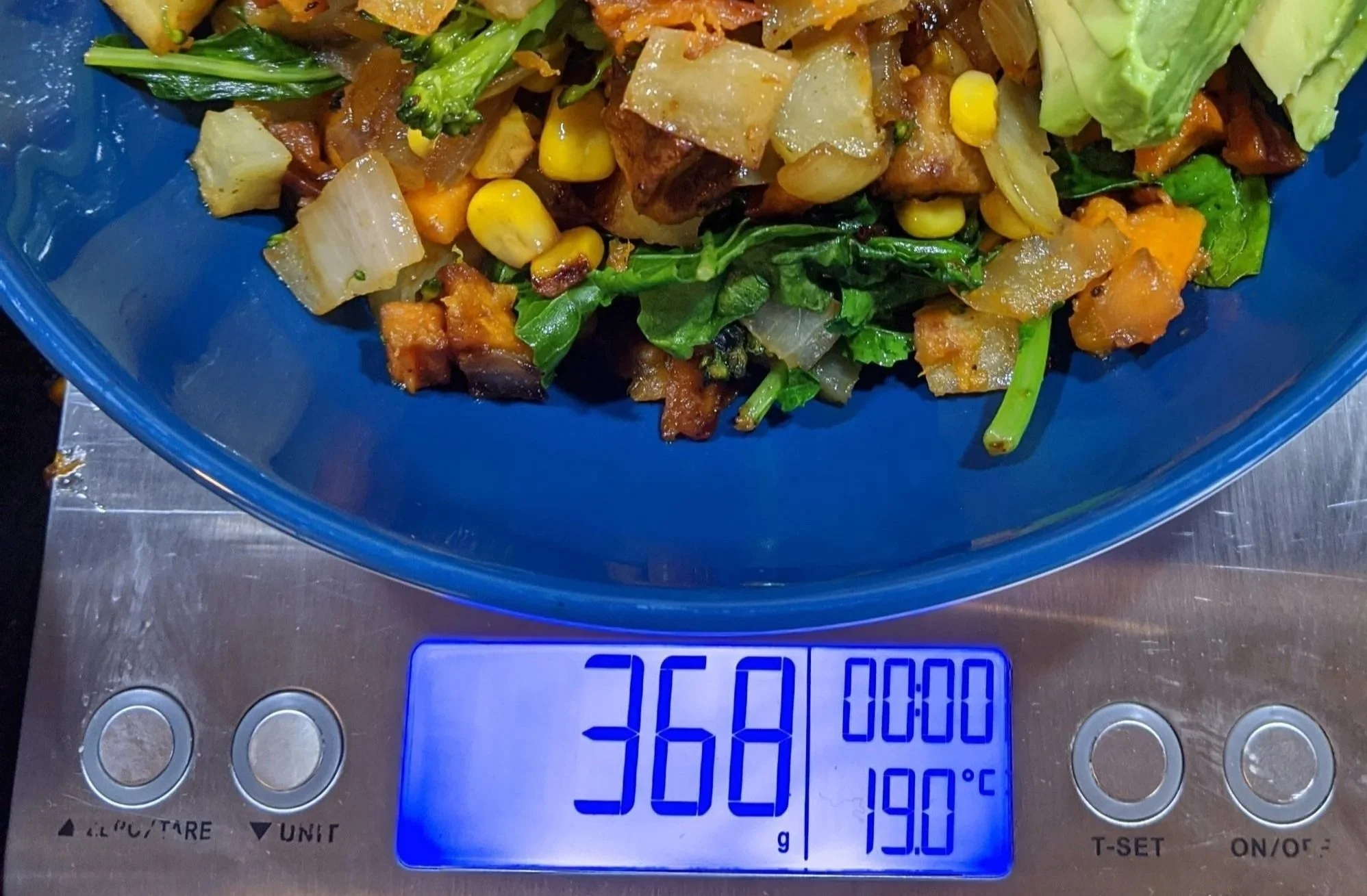
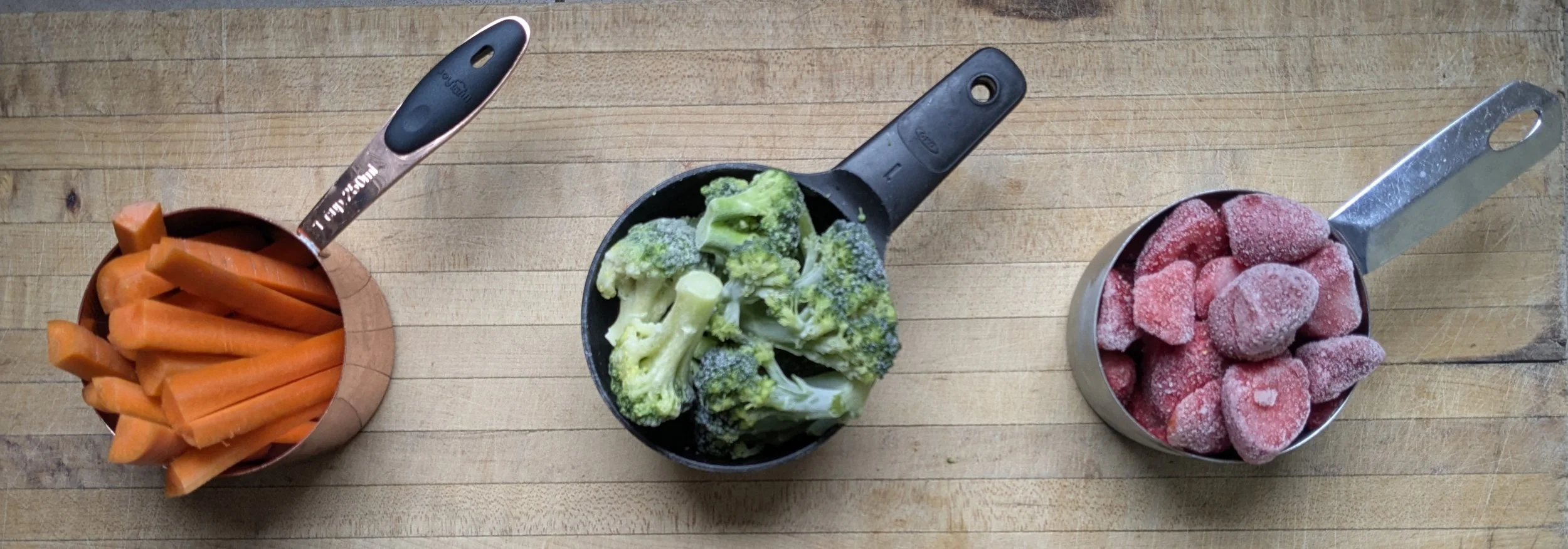
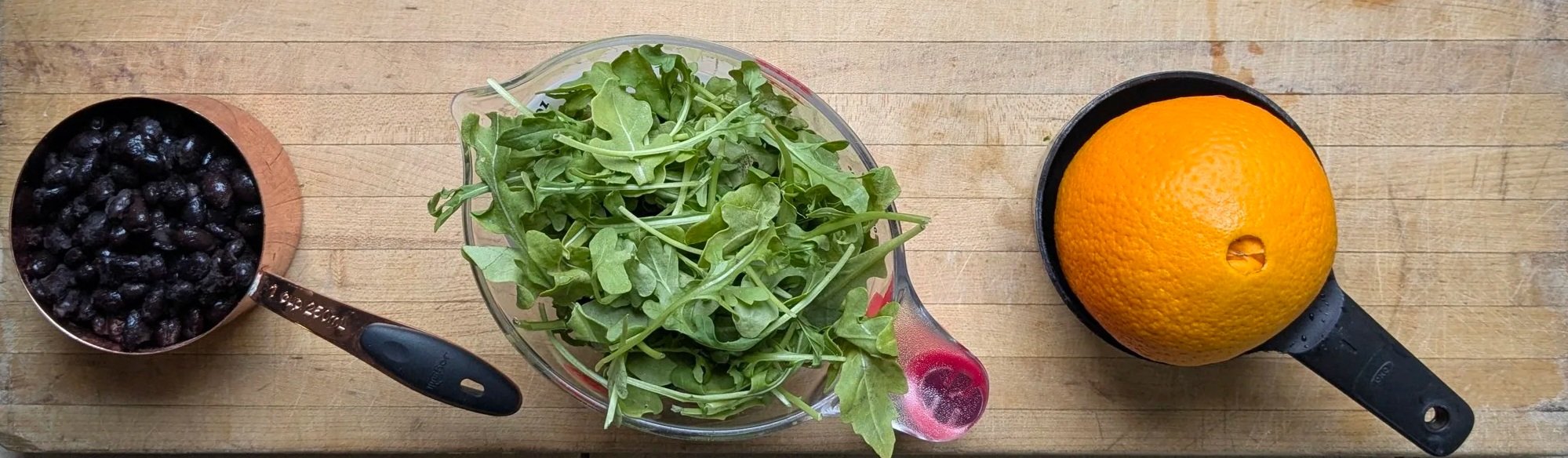
Food scale if/when you have access, Measuring Cup (= your hand in a fist) the rest of the time
1. Kitchen Food Scale
The most accurate method
2. Measuring Cups (or your hand in a fist)
Can be up to 95% as accurate as using a food scale
🔽 DOWNLOAD THIS LOG 🔽

How’d You Do?
Compare your log to the daily targets for women, listed below👇
✅ 5-6 cups in volume, or
✅ 700 - 800 grams/28 ounces in weight

Having Doubts about Eating More?
Learn how eating less than 6 fist-sized portions impacted me & my clients
THE DETAILS
Fruits: Veggie Ratio
Vegetables should make up at least 3/4 of your daily Fruits & Veg intake, unless you have a physically active job like construction work, or are an endurance athlete.
Fiber
This study graph shows the relationship between eating more fiber and lean body mass, with 50 grams per day as the top consumption rate 🤯.
25-30 grams of fiber per day is enough to benefit without minimizing benefits from other food types.
Nutrient Breakdown: a Day of Fruits & Veggies
6 Cups/800 grams of F&V contains:
~ 50 - 150 grams of carbs
~ 400-500 calories
~ 10 grams of protein - more if you eat legumes
~ countless vitamins & minerals
SIMPLE Methods More Fruits & Veggies
If it’s not simple, we’re not gonna do it.
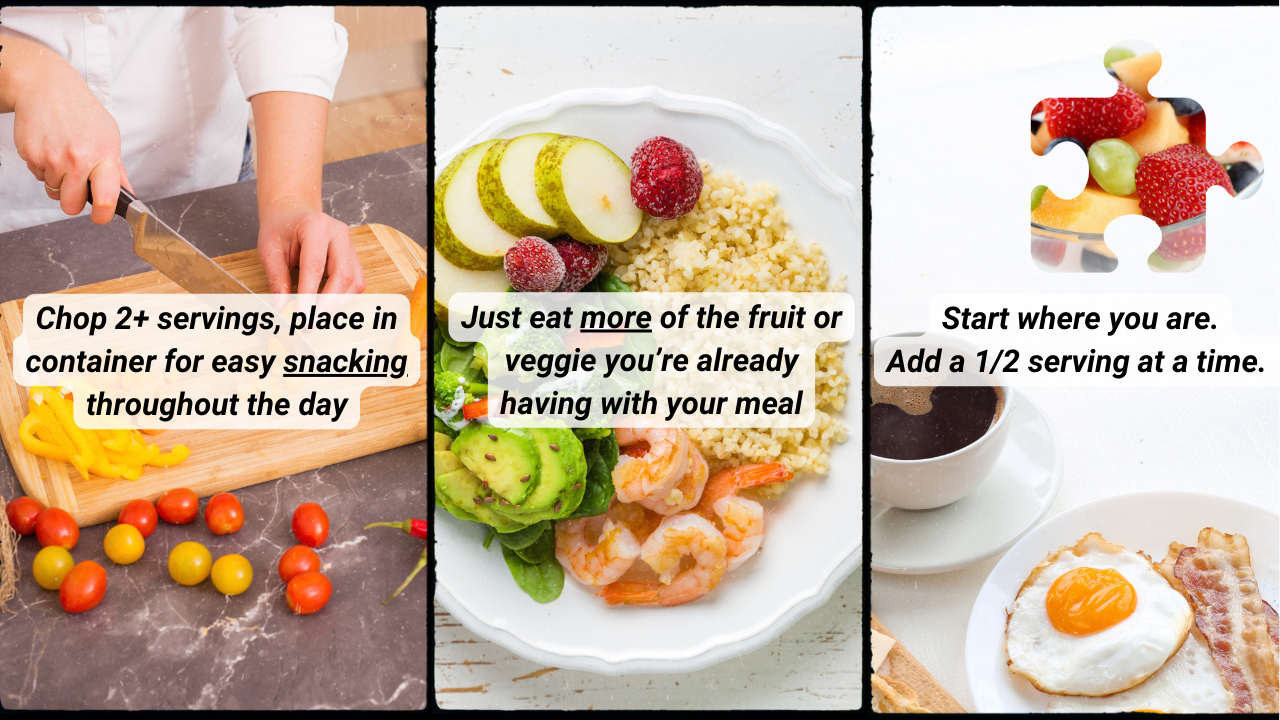
Keep your regular eating routine but increase the portion size of your fruits & veggies to 1-2 fist-sized servings
Add a fruit or veg to any meal that is consistently lacking, up to 1-2 fist-sized servings.
Purchase pre-chopped or chop up 2 fist-sized servings of fruits & veggies, put them in a bowl to be munched on at snack times.
REACH OUT after you finish tracking & changing your fruits and veggie intake, so you can get your Step 2. assignment!
@homegrownfit on Instagram
References:
“Fruit & Veggie Log + What Counts” comes from Optimize Me Nutrition’s 800 Gram Challenge framework. https://optimizemenutrition.com/800g-challenge/
Fiber Intake: PMID: 38011755, PMID: 25552267, PMID: 41161230, PMID: 25552267
Fruit & Veg (F/V) for Mortality Risk: PMID: 28338764
F/V & Fat Mass in populations: PMID: 29643151
F/V alone as weight loss intervention: PMID: 24965308
Ready to Revolutionize your Life in Menopause with Anne?
Click the button below to book a call
👉Click Here👈 for more details about working with Anne (video)